

Ron Suarez is a cognitive neuroscientist turned social impact entrepreneur working on digital equity and community-owned Internet infrastructure. He is the founder of the Broadband Institute Foundation, where he leads efforts to build regenerative, cooperative broadband networks that enable local communities to own and operate their own Internet services. His work bridges technology, education, and social justice, helping underserved populations develop sustainable circular economies through Commons-based peer production and collaborative learning platforms.
Over a career spanning more than four decades, Suarez has worked across cognitive neuroscience, artificial intelligence, object-oriented software, educational technology, and global health learning networks. A recurring theme throughout his work is a commitment to democratizing access, fostering innovation, and keeping the Internet a tool for community empowerment and inclusion.

Early Life and Education
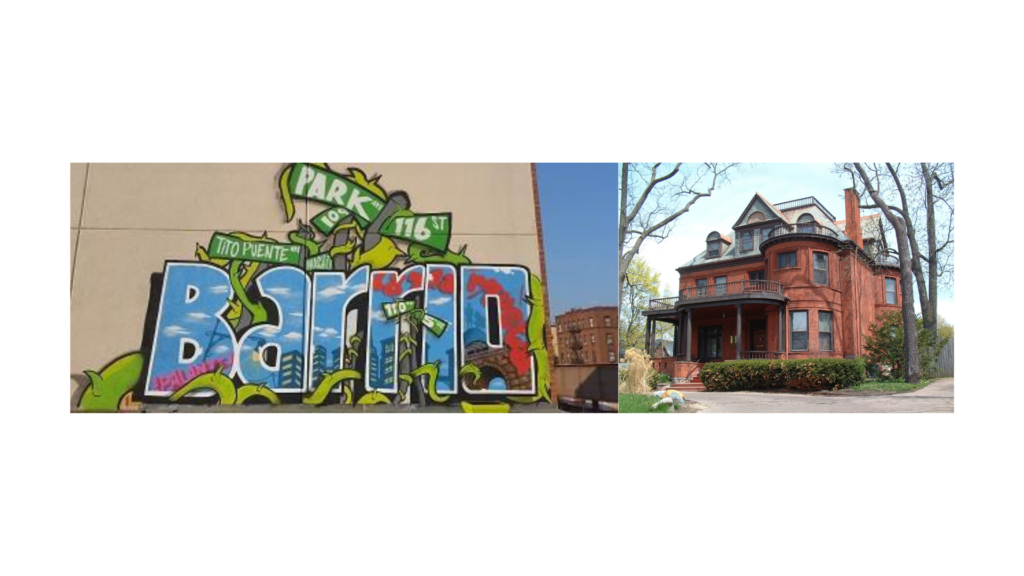
Distance Traveled
Suarez was born in 1950 in Spanish Harlem, NYC (aka El Barrio). During the 1990’s his company’s headquarters were in a 7,500 sq ft mansion he owned. He hosted meetups, brown bag lunches, volleyball beer & pizza parties, a basement pool table, etc. to promote human connectivity and learning.
In 1971, while an undergraduate at New York University, Suarez founded a food cooperative, an early expression of the cooperative and commons-based principles that would shape his later work. During the 1970s, his academic path followed the broader shift in psychology from behaviorism to cognitive science. He earned his PhD from the University of Michigan, after which he secured grant funding to continue a four-year postdoctoral fellowship in cognitive neuroscience.
Career
Artificial Intelligence and Expert Systems (1980s)
Suarez’s background in cognition led him into corporate training in artificial intelligence, with a focus on expert systems during the 1980s. This marked his transition from academia into the software industry.
Object-Oriented Technology (late 1980s–1990s)
Suarez participated in the industry shift toward object-oriented technology. In 1988 he founded Arbor Intelligent Systems, Inc., a company focused on expert systems and object-oriented programming, offering Smalltalk programming products, training, and consulting to Fortune 100 clients. He sold the company in 1998 for $3.1 million. This was a 100x return on a $30 K investment to purchase Small Systems Guild, a worker owned Mac programmers cooperative he co-founded in 1986. SSG developed curricula and delivered training classes worldwide under contract with Apple. In early 1988 SSG created a hypermedia (web like) interface for Dayton Power & Light in C, that was so complicated the team shifted to Smalltalk.
In 1998 he founded Object Insight, Inc., which developed JVISION, a round-trip engineering tool for Java programmers positioned as “UML for the rest of us.”
Digital Music and Content Management (2000s)
Around 2006, Suarez took part in the digital transformation of the music industry. His company, LoudFeed, Inc., built a digital content asset management system on Ruby on Rails that allowed independent labels and artists to distribute and sell their music through platforms such as iTunes, Amazon, and Rhapsody. His stated goal was to create “a new middle class of musicians” by freeing them from traditional labels. In 2008, the company drew acquisition interest from Tunecore, but the deal collapsed in the wake of the September 2008 financial crisis.

Civic and Community Technology

Dr. Ron Speaking before Congress: “Cities for Peace” (2007)
Suarez has paired his technical work with civic and political organizing. As an Ann Arbor City Councilman, he was among the local officials who testified before Congress in 2007 as part of the “Cities for Peace” initiative organized through the Institute for Policy Studies.
In this video, Suarez discusses the impacts of globalization on small businesses in the United States and highlights the challenges he has faced with the country’s broken health care system.
“Cities for Peace” was organized by Karen Dolan.
First Developers for Occupy Wall Street (2011)
In 2011, Suarez and his wife, Margarete Koenen, served as the first developers of the Occupy Wall Street website, built on WordPress and BuddyPress, which registered roughly 9,000 people across 100 working groups.
In this video, Suarez presents an early version of the Occupy Wall Street website and showcases several of its core features, including groups and an activity feed.
This video was taken at a NYC WordPress meetup.


Building Antennas to Turn Teens into Cable Cord Cutters (2013)
In 2013, he worked with interns at the Red Hook Initiative in Brooklyn, where he taught classes in building over-the-air HDTV OTA antennas from recycled materials (including coat hangers, scrap wood, and electrical parts). With guidance from the New America Foundation’s Open Technology Institute (OPI), this same community mesh network later supported communications when power failed in Red Hook during Hurricane Sandy. This work marked an early step toward his focus on community-owned network infrastructure. Additionally, the software built for Occupy also aided in recovery efforts during the aftermath of Hurricane Sandy.
Global Health Learning Networks (2014–2015)
From 2014 to 2015, Suarez built LeaderNet (leadernet.org), a USAID-funded social network with online courseware and community-engagement tools built on BuddyPress, used to train global healthcare leaders confronting HIV, TB, malaria, and Ebola across Africa and Asia. (The site has since been taken offline.)
Current Work
As founder of the Broadband Institute Foundation, Suarez advocates for Internet open access, digital equity, and fundamental systemic change. He works to build cooperative broadband networks owned by the communities they serve, applying Commons-based peer production and collaborative learning to advance digital inclusion. The Foundation operates as a platform cooperative, creating and curating Creative Commons educational materials that teach community members to build and own local broadband infrastructure.
NYC Mesh Presentation (2024)
In April 2024, Suarez presented to NYC Mesh, a community network pursuing free fiber backhaul in New York City. We would like to thank Marg Suarez (no relation) for placing Dr. Ron on the list of presenters.
NYC Mesh is a diverse group of volunteers dedicated to ending the digital divide and extending high-speed, reliable internet to all New Yorkers. You can help by joining our community network to get online, volunteering to connect neighbors or grow the network, and donating to improve our community infrastructure and ensure access for all.
Selected Ventures
- Arbor Intelligent Systems, Inc. (1996) — expert systems and object-oriented programming; sold for $3.1M in 1998
- Object Insight, Inc. (2002) — JVISION, a round-trip engineering tool for Java
- LoudFeed, Inc. (2008) — digital music asset management for independent artists
References and External Links
- Video history (2007–2024): https://communityinter.net/drron-suarez/
- Member profile: https://communityinter.net/members/drron/
- Arbor Intelligent Systems (Internet Archive, 1996): https://web.archive.org/web/19961223061122/http://www.aisys.com/
- Object Insight (Internet Archive, 2002): https://web.archive.org/web/20000827131919/http://www.object-insight.com/
- LoudFeed (Internet Archive, 2008): https://web.archive.org/web/20080925010248/http://loudfeed.com/home/features
- LoudFeed demo video: https://youtu.be/HHvFUksTclY
- “Could forming worker-owned cooperatives assist with economic recovery?”: https://communityinter.net/experience-forming-worker-owned-cooperatives/